
Miramar Previous Resident Sources
No single record lists every past resident of a Miramar parcel. Deeds name owners, while census pages and city directories can name occupants. Permits tie people and work to a dated address. Newspapers and probate files may explain why a household left the trail. Choose the first source by era, then cross-check the claim it supports.
| Source | Years It Covers | Where Held | What It Shows |
|---|---|---|---|
| Broward Official Records full index | July 7, 1977 to present | RTT web portal | Grantors, grantees, documents, dates, and images when available |
| Limited Official Records index | March 9, 1972 to July 7, 1977 | RTT web portal | Instrument, book, and date searches |
| Earlier deeds and media | Ownership since 1883; other media from 1871 | RTT Search and Copy | Pre-web title chain and recorded notices |
| Federal census | Through 1950 public in 2026 | NARA and library databases | Household, relationship, age, birthplace, and occupation |
| City directories | Exact Miramar runs not published | Broward County Library resources | Named householders and addresses between census years |
| Miramar permits and GIS | Post-incorporation; digital cutoff not published | City Building Division, Clerk, and GIS | Address, applicant, work, parcel, and development context |
For a recent address, begin with the Broward County Property Appraiser. For an older owner, move into Official Records. A household question needs a directory or census layer as well. Pre-1955 research may use Broward or Dade predecessor geography because Miramar had not yet incorporated.
Three Miramar Record Eras
Broward Official Records has three access eras. Full party-name searching starts July 7, 1977. From March 9, 1972 through that cutoff, the web search is narrower and relies on instrument, book, or date details. Material before March 1972 is not on the web. The county's Search and Copy staff hold older media, including ownership documents dating to 1883 and other records reported from 1871.
This is the key myth to avoid: everything is not online. When a title chain reaches the limited era, copy the instrument and book/page references from the latest deed. For earlier work, contact Broward Records, Taxes and Treasury at the Governmental Center in Fort Lauderdale. The office offers online access, counter help, telephone contact, and Search and Copy service. Certified copies use a separate fee route.
Record cutoff. Carry exact book, page, instrument, date, and legal-description details into Search and Copy when the online name index ends.
Bridge Old Miramar Addresses
A legal description is often more stable than a street label. It identifies the land by subdivision, plat, lot and block, or by metes and bounds. Keep it beside the Broward folio, which is the county's parcel ID. A deed may omit the modern postal city yet still describe the same land.
Miramar's main address trap is expansion, not a verified citywide renumbering. The original city ran from SW 64th Avenue to University Drive, with Pembroke Road to the north and the Miami-Dade line to the south. Today's Miramar reaches west toward U.S. 27. A parcel west of University Drive may have joined the city long after an older deed or directory was made. Search its subdivision and parcel history instead of back-projecting the current city name.
The city's current GIS includes both ownership and historic-parcel layers. A 2025 update also split out right-of-way address points. Those map features can explain duplicate points and changing parcel shapes, but they are not certified title evidence.
Trace Miramar Owners Backward
The reliable path to previous residents begins with today's parcel. Broward deeds are indexed by owner, so an address alone is a weak starting point. Use the Broward County Property Appraiser search to obtain the current name, folio, situs address, legal description, sales, and deed reference. Situs means the physical parcel address. The tax-mail address is where notices go and may be elsewhere.
- Search the address in BCPA. Save the owner, folio, legal description, sales, and cited deed.
- Find the current owner's purchase deed in Broward Official Records. Read the image, not just the index row.
- Record the seller, buyer, execution and recording dates, instrument or book/page, and legal description.
- Search the seller as a buyer in earlier years. That earlier purchase should identify the next seller.
- Repeat until the web index narrows. Use known references for 1972 to 1977 and Search and Copy for older media.
- Pair each owner with an occupant source before calling that person a former resident.
- Grantor and grantee
- The grantor transfers the interest; the grantee receives it.
- Chain of title
- The linked sequence of recorded ownership transfers for one parcel.
- Legal description
- The formal land description that survives changes in street and postal wording.
A deed proves a transfer. It does not prove that either party lived at the property for the whole period. A trust, company, estate, or person with a remote mailing address may hold title.
Miramar Permits Fill Record Gaps
Most Miramar homes postdate the early 1950s. Permits, subdivision plats, and aerials are often more useful than Sanborn fire-insurance maps, since no official source verified exact Miramar Sanborn sheet years. A permit can name an applicant, owner, contractor, work description, and date. It still does not prove that the applicant occupied the home.
The Miramar Building Applications and Forms page links the public-record request and permit-lien request. The city warns that residential plans are not required to be retained forever. Requests may be made through the Building Division route, while City Clerk channels cover other municipal records. Broward plats can bridge a modern street address to an old book and page even when an early deed lacks current postal wording.
Miramar's First 56 Homes
Miramar began in 1953 when Abraham Mailman bought a 1,200-acre dairy farm from Henry D. Perry Sr. and built 56 homes. The city incorporated two years later with fewer than 200 people. That small first cohort gives Historic Miramar house research a clear starting point.
For one of those early parcels, pair the legal description and deed chain with the 1950 census for the pre-development landscape, then use post-1953 permits, regional directories, and newspapers. The newest public census as of 2026 is 1950. Miramar-specific census enumeration becomes meaningful only after the development began, so the absence of a Miramar household label before then is not a broken search.
Request Missing Miramar Records
A public-record request should name a record, address, date range, or permit number. It should not ask an agency to create a list of everyone who ever lived at a house. Florida Public Records Law allows access to identifiable agency records, subject to exemptions, but each custodian controls its own files.
The Florida Department of State records request page illustrates the direct-custodian route. The captured state request page appears below.
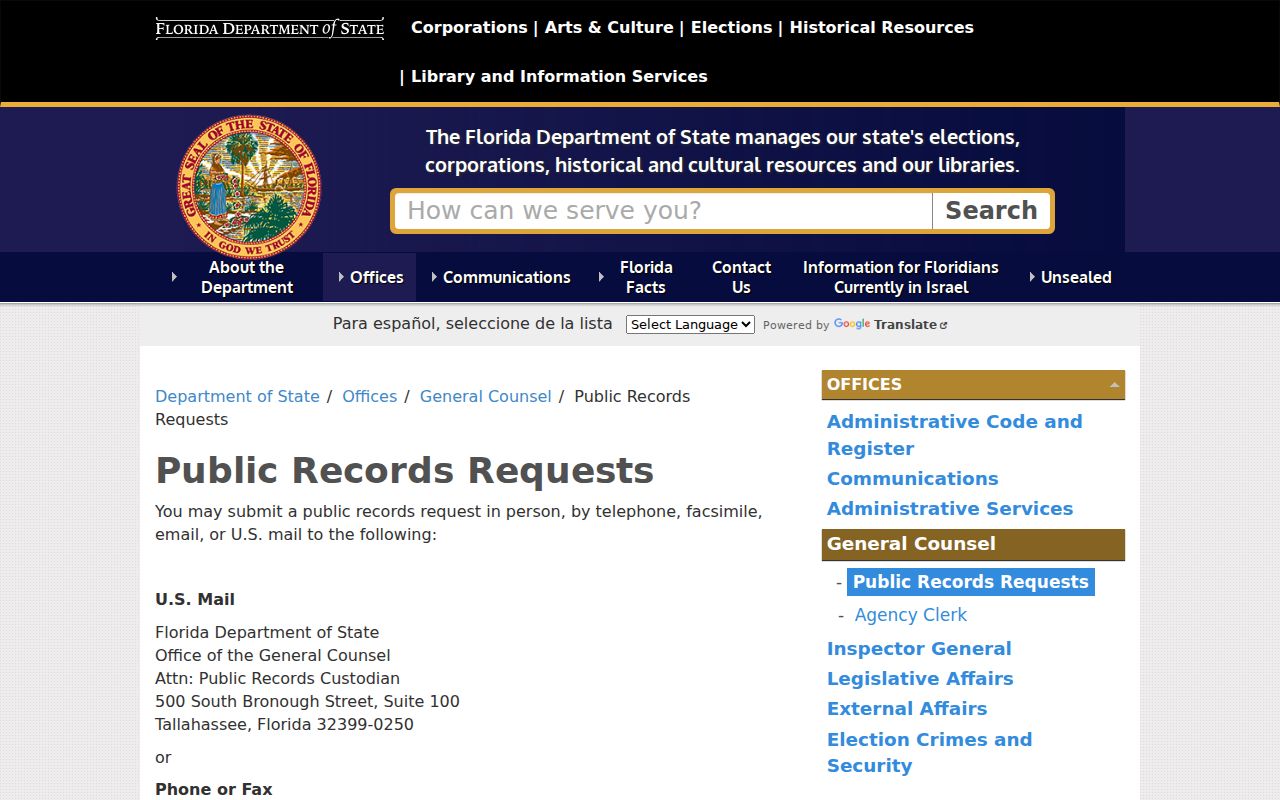
For Miramar material, choose the city's General Public, Building, Fire, or Police route. For deeds, use Broward RTT. State archives and state-agency files require their own requests.
Miramar Past Household Evidence
Owners are only one part of the trail. A criss-cross directory is arranged by street and house number and may name an adult householder. The census can show household members, relationships, ages, birthplaces, and occupations. Exact Miramar directory runs have not been published by the library, so confirm title, year, publisher, and coverage before relying on an entry. The collection access details are covered in the Miramar city directory research.
Use a simple flow: address and legal description, deed owner, directory householder, census household, then obituary or probate. Match the dates. A directory between census years may show a move sooner, while the census gives more household detail. If a name vanishes, check the sale deed, a neighboring city directory, surname variants, and regional newspapers before assuming death.
Obituaries can identify relatives, former cities, churches, and burial places. They may contain family-supplied errors, so confirm key facts against a death record or probate docket. Broward probate may name a personal representative, heirs, creditors, and property when those entries are public. A recorded estate deed can carry the address trail forward after an owner's death.
Lawful use. Research Miramar previous residents for family history, estate work, or personal property history. Never use records to stalk, harass, or harm a living person.
Confirm Miramar Former Residents
Miramar's strong Caribbean and Latin American ties make name variants especially important. Test compound surnames, omitted accents, initials, married names, and shortened given names. A directory may abbreviate a name, while a deed may use the full legal form. The dates and address must still align.
Business and professional records can help only when they bear on the same dated person. Florida's license search may show a public name, status, and address. Open the DBPR name search before viewing the captured interface.
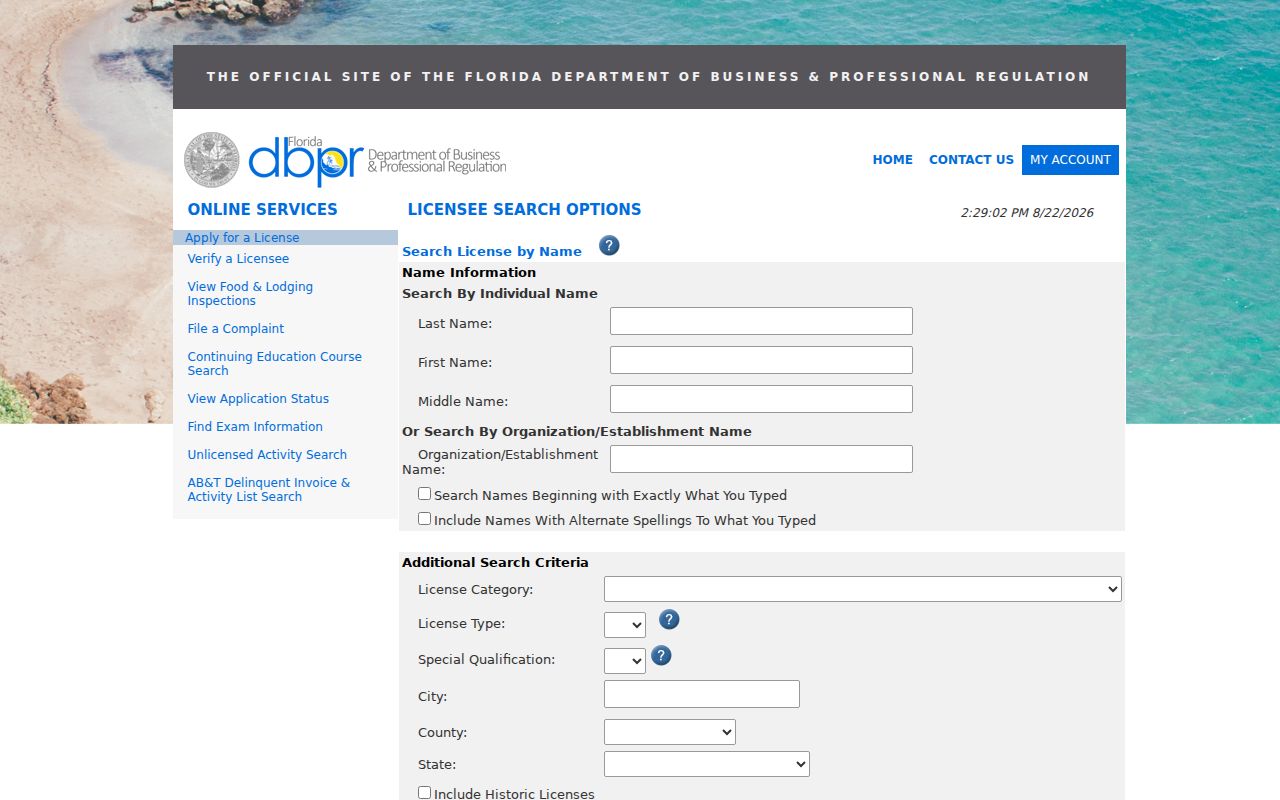
A license address is a dated professional record, not proof of a whole household. Compare it with a deed, directory, census, probate, or newspaper record before linking it to the same past resident.